Theatre and Life: Theatre at the Intersection of Art, Politics and International Development
Chapter 1 establishes the theoretical and historical framework for this ethnographic study of theatre in Nepal during the politically turbulent mid-2000s. Set against the backdrop of the 2005 royal coup and the ensuing civil unrest, the chapter explores how dramatic performance operates at the intersection of art, politics, and international development to challenge both everyday social problems and macro-political conflicts.
The Transformative Power of Performance A central theme is the conceptualization of theatre not as simply entertainment, but as a transformative force. I examine three primary modes of theatrical intervention: kachahari natak (NGO-funded development theatre based on Augusto Boal’s “Theatre of the Oppressed,” which turns audiences into active “spect-actors” to solve community issues); loktantrik natak (spontaneous, pro-democracy street theatre used to protest autocracy); and Maoist revolutionary theatre (militant agit-prop used to ideologically mobilize the masses). Across these forms, the aesthetic space becomes a practical arena for citizens to rehearse and enact social change.
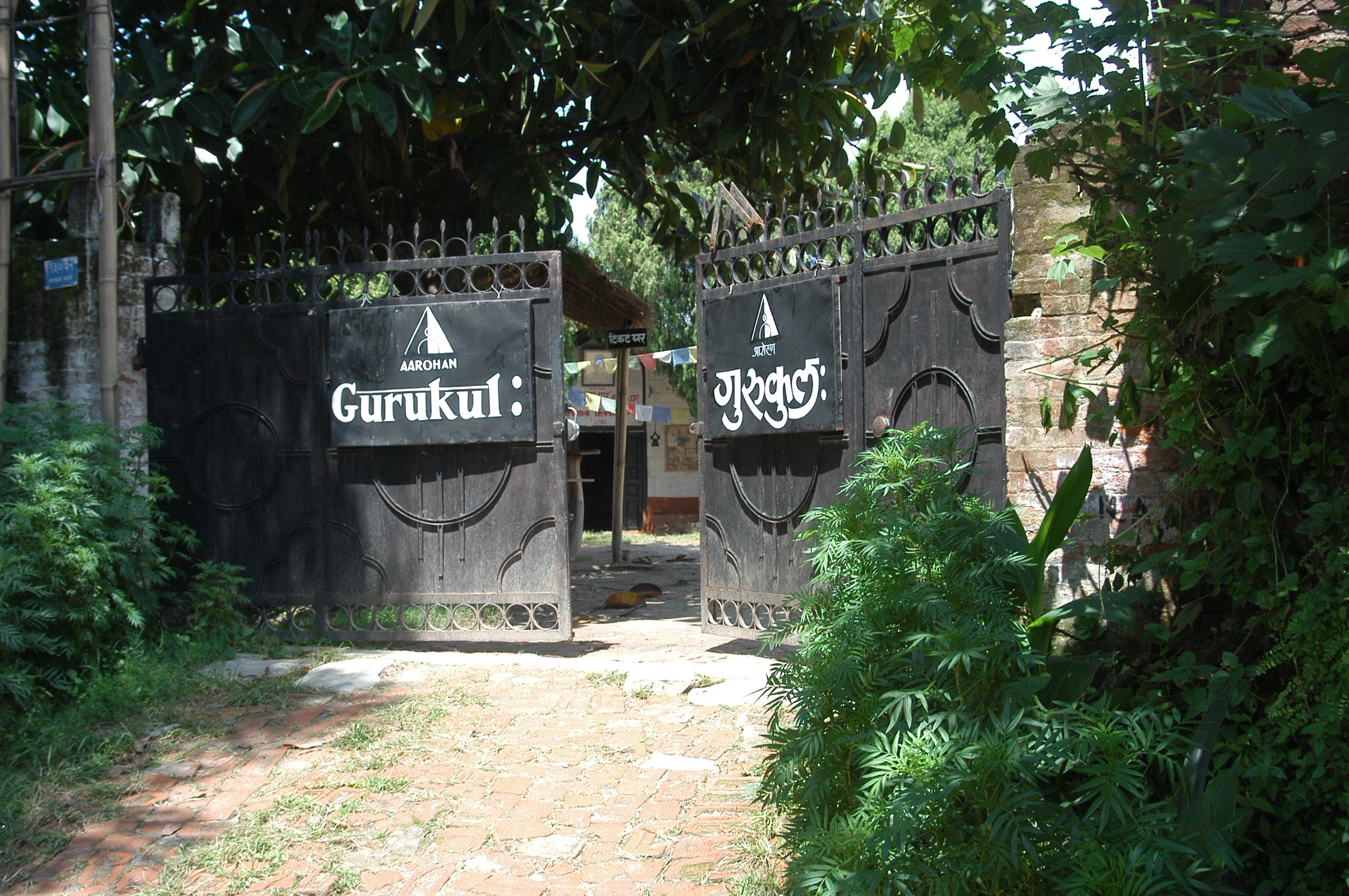

Gurukul School of Theatre, Purano Baneshwar (2005)
Theatre, Power, and the State The chapter contextualizes contemporary theatre within Nepal’s history, highlighting how performance has long been intertwined with political authority. Historically, Malla and Shah kings utilized public rituals and street festivals to symbolically legitimize their rule. Conversely, the autocratic Rana regime (1846–1950) confined theatre entirely to their palaces, creating a sharp divide between elite entertainment and popular performance. This legacy birthed a modern fracture between official, government-sponsored academy theatre and the independent, pro-democracy street theatre that emerged in the 1980s as a form of grassroots resistance.
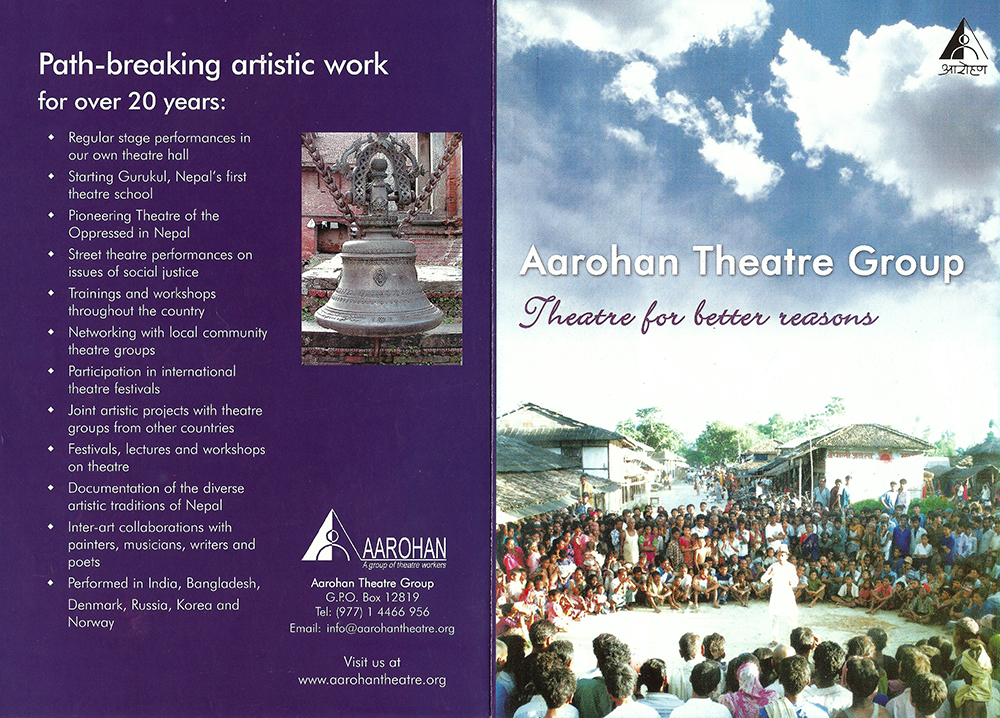
Aarohan Theatre brochure (2005)
Professionalization and Artistic Respectability The ethnography examines the struggle to legitimize acting as a respectable profession, focusing on the Kathmandu-based Aarohan Theatre Group. Historically stigmatized as an uneducated, low-class pursuit, theatre required intentional cultural elevation. Aarohan strategically staged complex foreign plays to cultivate an intellectual audience and earn cultural prestige. To solve the persistent lack of state funding, training, and performance continuity, the group established Gurukul in 2002—an integrated, commune-style theatre school that finally allowed artists to practice theatre as a full-time, sustainable career.

The Paradox of Development Patronage Because the Nepali state offered virtually no support for the independent arts, international non-governmental organizations (INGOs) became the de facto patrons of theatre. This dynamic created a paradox: while development agencies instrumentalized theatre as a utilitarian tool for advocacy and behavioral change, theatre artists pragmatically used these NGO-funded “development projects” to financially survive. This NGO street-work effectively subsidized their true passion, creating autonomous, artistic stage productions.
Ethnographic Co-Performance During fieldwork I explored co-performance as methodology, blurring the lines between observer and participant. This multi-sited, embodied approach fostered shared experiences, while also exposing the ethical tensions, personal risks, and vulnerabilities inherent in navigating deeply divided political landscapes during a time of national emergency.

Group photo after the performance of “Dreams of Peach Blossoms” on 1 February 2005.


Posters of the movie “Naya Nepal”, directed by Kishor Dhakal (2007), in which I played one of the lead roles.
To cite this book and read more: Rehearsing for Life. Theatre for Social Change in Nepal, Cambridge University Press (2018) available here.