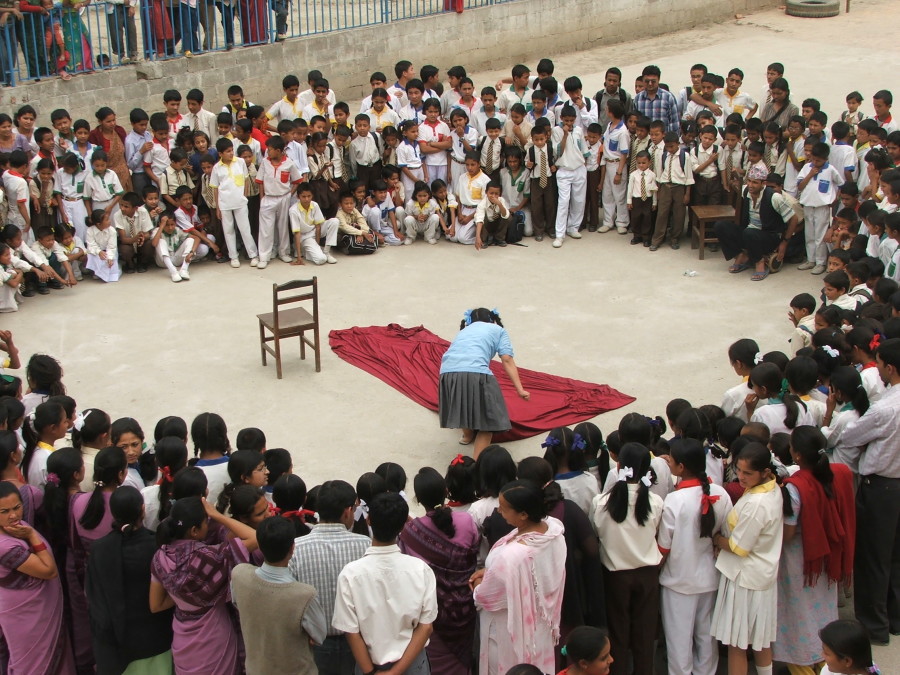
In addition to the political entanglements of performance, my research explores the material realities of artists, critiquing the socio-economic and patriarchal structures that condition creative work in the Global South. A central concern here is the tension between artistic autonomy and the project-based funding of the development industry. In my 2007 article “‘Dramas of Development’,” I detail how international agencies frequently employ street theatre (bikase natak) for top-down behavioral change, a process that often forces artists to deliver “performances of success” while diluting their own aesthetic agency.
My recent scholarship expands this critique to address intersectionality and economic precarity. I propose the concept of “representational labour” to frame female performance (under review). In chapters like “Gendered stages of Nepal” (2026) I offer a historical analysis of how women progressively negotiated their presence onstage while in my 2026 chapter on Janakpurdhām, I examine how women artists in the conservative Tarai-Madhes region navigate dual constraints: the systemic instability of a donor-dependent arts sector and the patriarchal policing of their public visibility. Historically confined to private spaces to protect family honor (ijjat), women stepping onto the public stage engage in a radical social transgression.
Additionally, my 2022 article “Nepali Theatre beyond Nepal” addresses the systemic precarity facing contemporary artists more widely. Lacking state subsidies and formal academic infrastructure, a growing diaspora of Nepali theatre makers are migrating abroad for education and financial survival.