I’m interested in performance and performativity, and the blurred space standing between ‘doing’ and ‘observing ourselves doing’ things . In particular, how theatre can create spaces for social and political transformation.
My research on theatre for social change—developed through my doctoral work at SOAS and my 2018 ethnography Rehearsing for Life—examines how theatrical performance operates not simply as a reflection of society, but as a socio-cultural practice that constitutes political action. Across several publications, I question the assumption that the theatrical stage is a neutral space, exploring instead how it functions as a highly contested arena where power is negotiated.
Part of this work investigates cultural activism during Nepal’s Maoist insurgency and the 2006 democratic movement (Jan Andolan II). In “Catchy Melodies and Clenched Fists” (2010), I analyze Maoist cultural programs as affective political rituals, demonstrating how militant troupes appropriated traditional folk forms to mobilize rural masses through shared grief and narratives of sacrifice. Shifting to Kathmandu in “Protests, Space and Creativity” (2016), I trace how pro-democracy street theatre (loktantrik natak) challenged autocratic rule by physically mobilizing citizens through shared emotions of indignation and hope.
My forthcoming chapter “Staging identity” (2026) extends this framework to the Tarai-Madhes. I trace how cultural organizations in Janakpurdham, such as the Mithila Natyakala Parishad (MINAP), used open-air theatre to resist the Panchayat era’s monolithic “One King, One Nation, One Language” policy. By performing in Maithili, these artists turned street theatre into a vehicle for ethno-linguistic assertion and democratic advocacy. Furthermore, my research on Tharu activists’ use of Augusto Boal’s Forum Theatre (kachahari natak) highlights how embodied performance circumvents cultural silences, allowing marginalized women to articulate the experience of indentured servitude. Ultimately, this body of work illustrates that “rehearsing for life” provides a practical, affective laboratory for citizens to challenge autocracy and construct political alternatives.
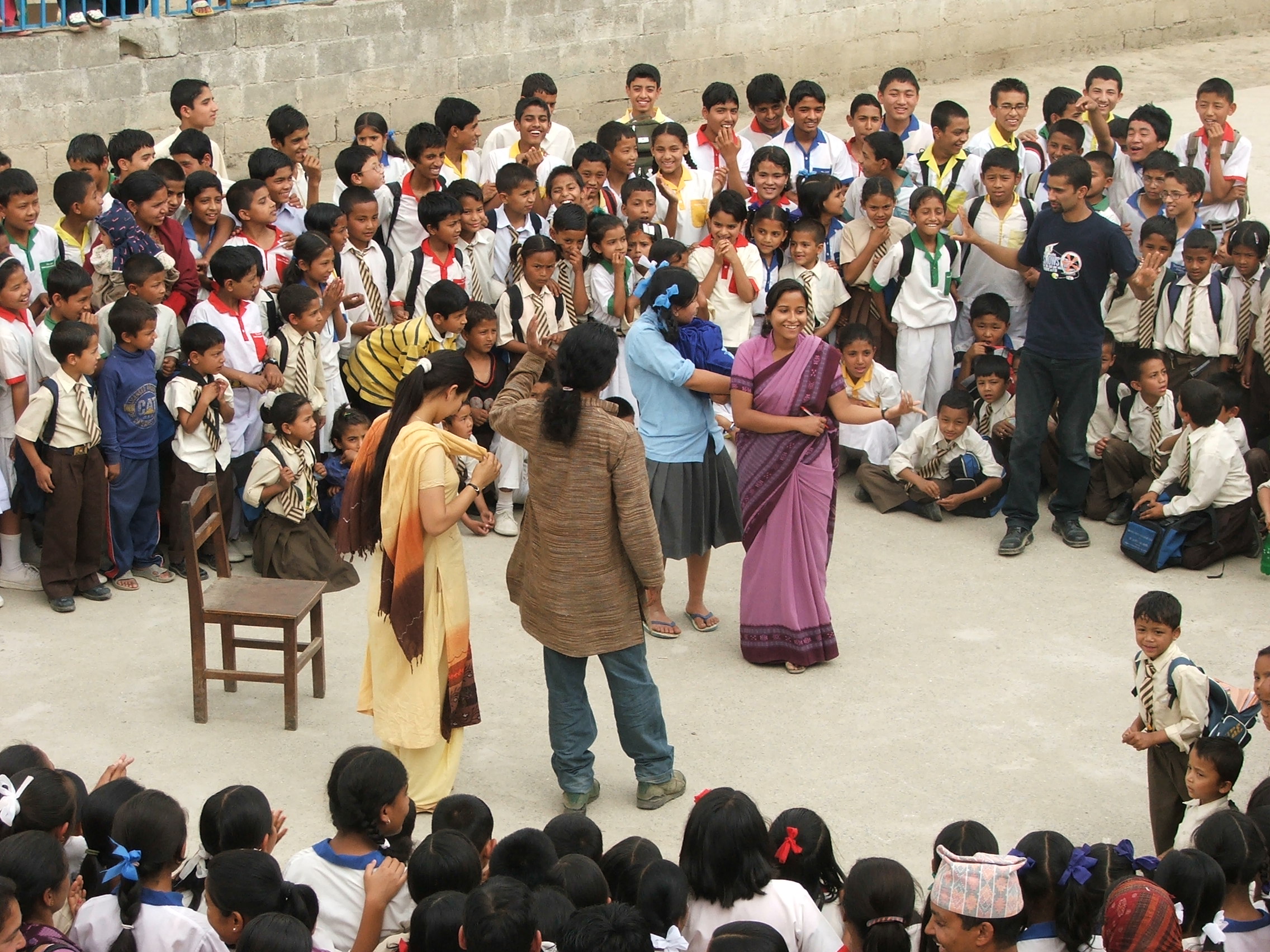
Kachahari natak performed by Aarohan at Tryjoti School, Kathmandu 2006 (Photo by the author)
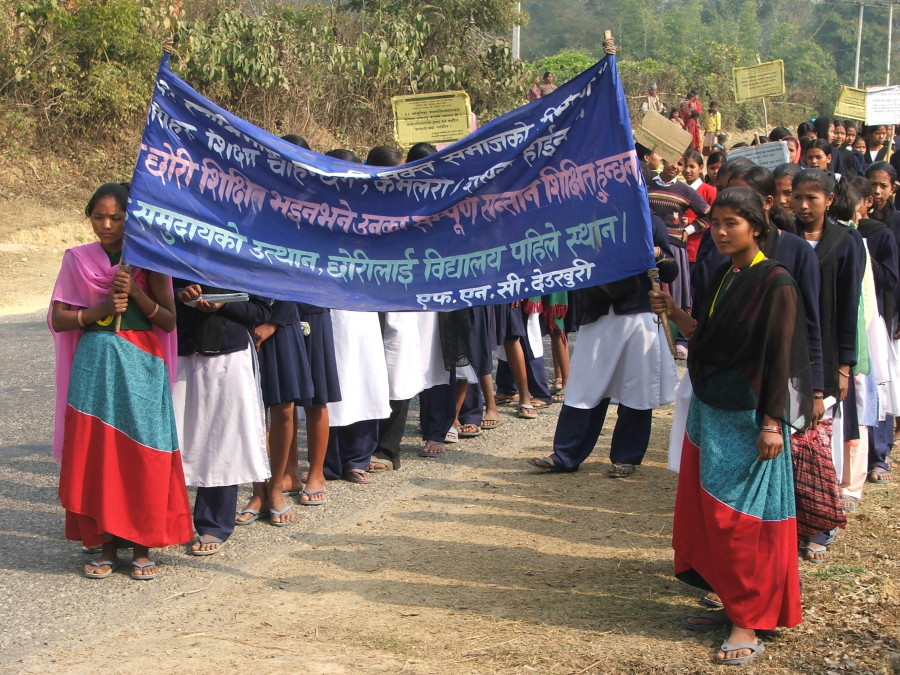
March against the kamlari practice in Lamahi, Dang, on Maghi festival in January 2006 (Photo by the author)
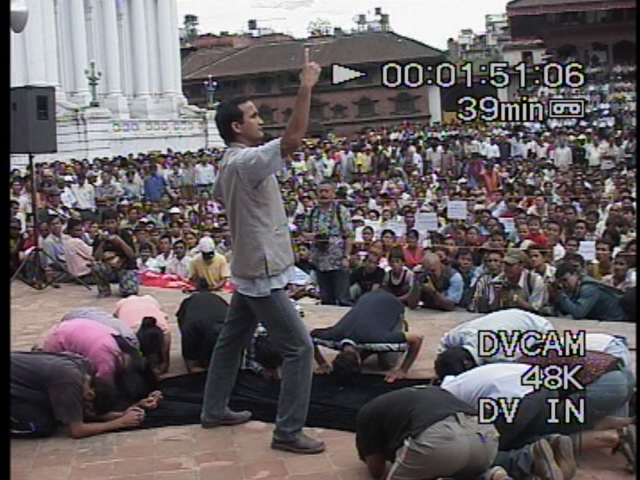
Aarohan Theatre Group, Kathmandu 2006 (Frame from video courtesy of Gurukul)
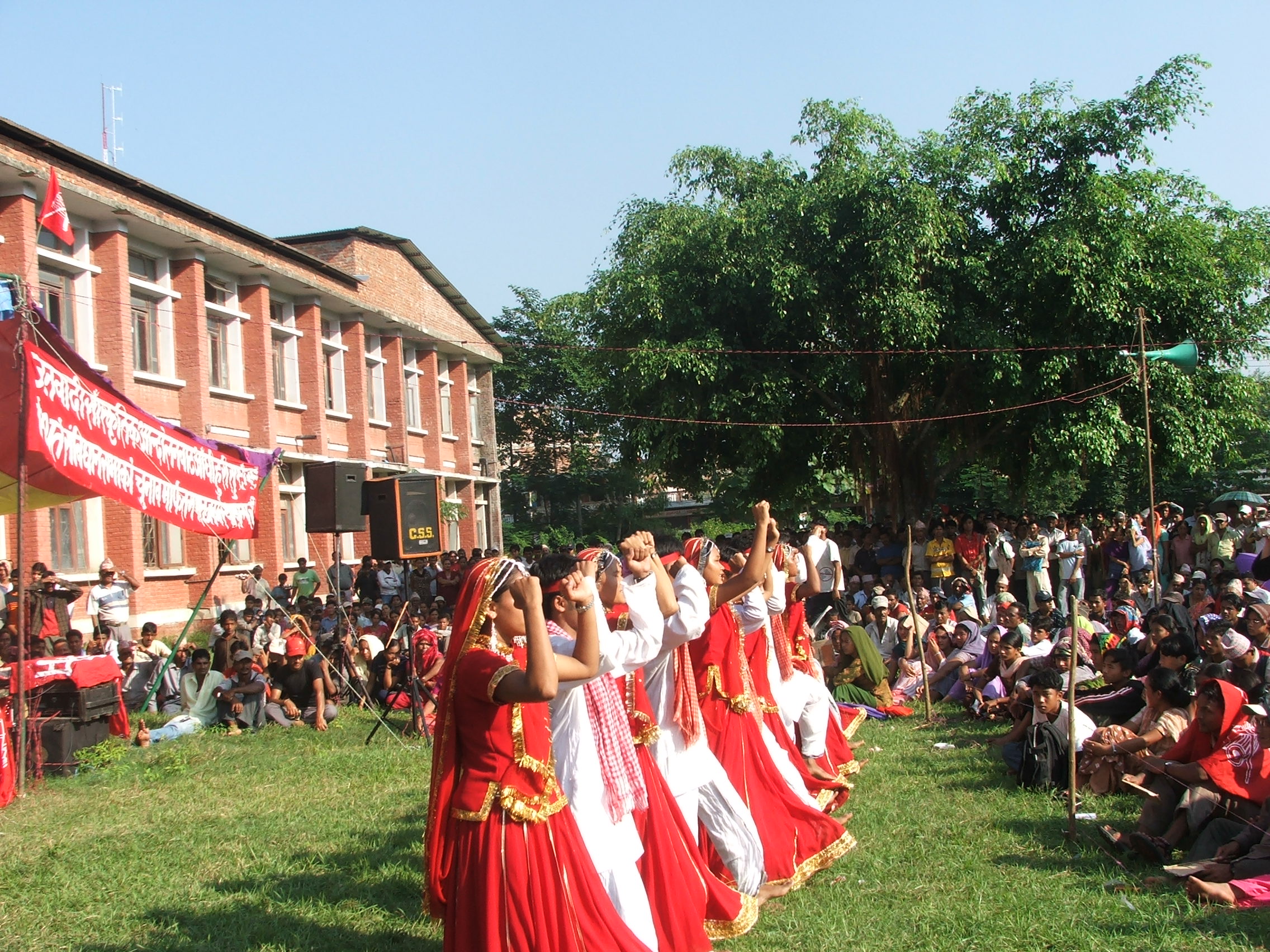
Sen Chyang Cultural Group, Bharatpur 2006 (Photo by the author)